
A bee problem can begin with a few insects near a porch, garden bed, roofline, or doorway. The concern grows when the same area keeps attracting them, flight paths become busier, or a nest is suspected near places people use every day.
Bees and other stinging insects require careful handling because the visible activity does not always show the full scope of the issue. Wasps, hornets, and yellow jackets can also gather around homes, and each species behaves differently. A professional inspection helps identify what is present, where activity is coming from, and whether the situation needs immediate control or a more measured long-term plan.
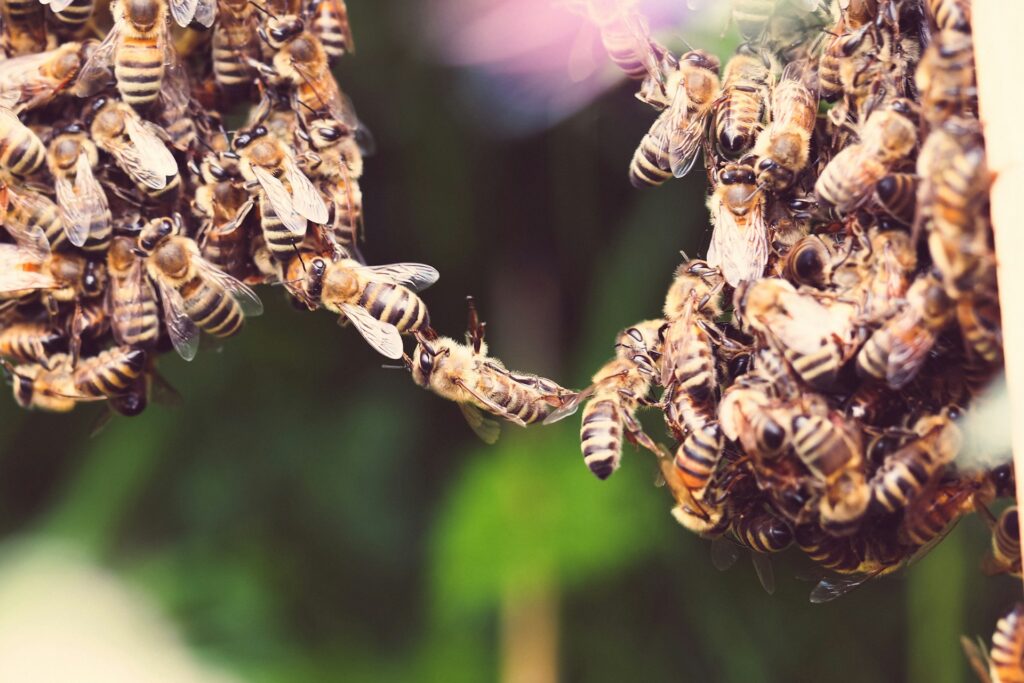
Repeated Swarming Around Porches, Doors, Or Outdoor Seating
Bee activity near a porch often happens because the area offers shelter, food residue, flowers, water, or a quiet nesting location nearby. Occasional foraging is normal, but repeated swarming close to entry points is different. When insects continue circling the same porch light, railing, soffit, wall gap, or deck edge, the home may be attracting more than casual visitors.
A porch, walkway, patio, or doorway should not feel risky to use. More information about porch bee swarms can help explain why these areas become attractive during active seasons.
Warning signs include:
- Repetition. Bees return to the same porch, doorway, or overhang day after day.
- Traffic. Insects follow a steady flight path into one opening or narrow gap.
- Clustering. Groups gather on siding, railings, shrubs, or roof edges.
- Aggression. Stinging insects react when people walk nearby or open doors.
- Access. Activity happens near children, pets, guests, or outdoor seating areas.
When these signs appear, professional help protects safety and helps avoid disturbing a hidden nest.
A Nest May Be Hidden In The Structure
A visible nest is not the only concern. Stinging insects may use wall voids, attic spaces, soffits, eaves, sheds, trees, ground openings, or gaps beneath decks. That makes the situation harder to judge from the outside.
Hidden nesting concerns may include:
- Sounds. Faint buzzing comes from a wall, ceiling, attic, or exterior void.
- Openings. Bees or wasps move in and out of a small crack or construction gap.
- Stains. Moisture marks, debris, or residue appear near a suspected nesting area.
- Numbers. Activity grows even when the visible gathering spot seems unchanged.
- Location. The nest appears near utilities, rooflines, play areas, or walkways.
This is where professional identification matters. Bees, wasps, hornets, and yellow jackets are not managed the same way. A wrong approach can increase defensive activity, spread insects into living areas, or leave the nest problem unresolved. Professionals evaluate the species, nesting location, risk level, and safest treatment path before work begins.
The Problem Is Part Of A Larger Pest Pattern
A bee problem may be the most noticeable issue, but it can also point to broader property conditions. Water sources, open trash, vegetation close to the home, food residue, and sheltered spaces can attract more than one type of pest. The same conditions that support stinging insect activity may also contribute to ants, cockroaches, rodents, ticks, mosquitoes, and termites.
A property-wide plan matters because seasonal problems often overlap. Warm weather may bring stinging insects outdoors, while moisture can support mosquitoes and termites. Exterior gaps can invite rodents, ants, and roaches. A one-time reaction may address what is visible, but it may not reduce the conditions that keep pest pressure active.
This guide on pest control risks explains why prevention is easier when pest activity is managed before it becomes established.
Professional support is useful when:
- Patterns. Several pest issues appear around the same time.
- Moisture. Standing water, leaks, or damp wood are present.
- Openings. Gaps around siding, vents, pipes, or foundations are visible.
- Vegetation. Shrubs, trees, or yard debris sit too close to the structure.
- Recurrence. Stinging insects return after earlier activity seemed reduced.
A careful inspection connects these details and helps create a longer-lasting strategy.
Someone In The Home Could Be At Higher Risk
Stinging insect activity is more serious when children, older adults, pets, frequent guests, or anyone with allergy concerns may be exposed. Even a small nest near a door can become a daily hazard if people have to pass it often. The goal is not to panic over every bee sighting, but to recognize when the location, behavior, and frequency create a practical safety concern.
Professional service is also important when the nest is high, enclosed, near electrical areas, or located where access is difficult. These situations call for proper equipment, controlled methods, and experience with stinging insect behavior.
Safer Steps Start With Expert Eyes
A bee problem should be taken seriously when activity becomes repeated, concentrated, defensive, or close to daily living areas. Professional inspections help identify the pest, locate nesting pressure, and choose a controlled solution that fits the property. For careful stinging insect service and long-term pest support, contact WPC Services.