
Seeing a cluster of bees gathering around your porch can be unsettling, especially when the activity appears sudden and intense. While bees are essential to the environment, their presence near entryways and living spaces raises understandable concerns about safety and property use.
From a professional perspective, bee swarming is a natural behavior, but when it occurs close to homes, it requires careful evaluation. Understanding why bees gather in specific areas helps determine whether the situation is temporary or something that may require pest control intervention.
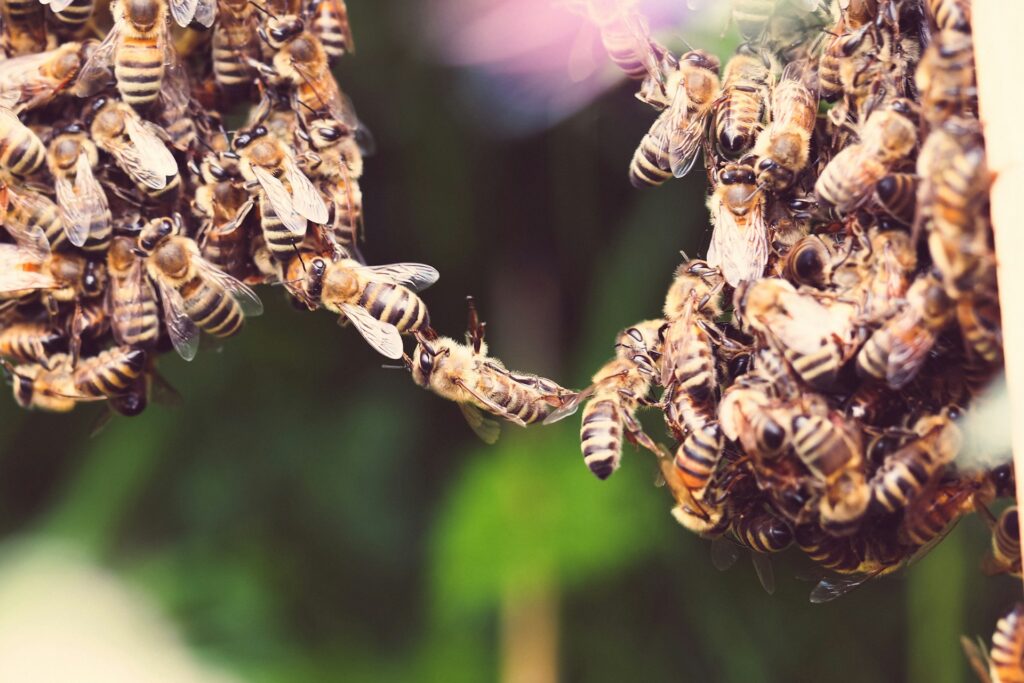
Understanding Bee Swarming Behavior
Bee swarming is a natural process tied to colony growth and reproduction. When a hive becomes too large, a portion of the colony leaves with a queen to establish a new home. During this transition, bees may temporarily cluster in visible areas, including porches, railings, or nearby structures.
Several factors influence this behavior:
- Colony expansion. Overcrowding within an existing hive triggers the need for relocation.
- Temporary resting points. Bees often gather in clusters while scout bees search for a permanent nesting site.
- Environmental conditions. Warm temperatures and blooming plants increase activity levels.
- Proximity to food sources. Flowering plants near porches can attract swarms during movement.
- Structural features. Covered porches provide shade and protection, making them ideal resting spots.
In many cases, swarms move on within a short period. However, when bees begin exploring crevices or sheltered areas, the risk of a permanent colony increases.
Why Your Porch Becomes an Attractive Spot
Not all porches attract bees, but certain conditions make them more appealing. These factors often go unnoticed until bee activity becomes visible.
- Sheltered design. Porches offer protection from wind and direct sunlight.
- Accessible entry points. Gaps in siding, roofing, or fixtures create potential nesting areas.
- Nearby vegetation. Gardens and flowering plants provide a steady food source.
- Moisture sources. Leaks or standing water can attract bees seeking hydration.
- Low disturbance areas. Quiet spaces with minimal activity allow bees to settle more easily.
As explored in our resource about bee removal options, identifying these contributing factors is essential before determining the appropriate response.
Recognizing why bees choose a specific location helps prevent repeat occurrences and reduces the likelihood of long-term infestation.
When Swarming Becomes a Concern
While many swarms are temporary, certain signs indicate that the situation may require closer attention. Knowing the difference between normal behavior and potential infestation is critical.
- Extended presence. Swarms that remain in the same location for several days may be establishing a hive.
- Increased activity near entry points. Bees entering and exiting structural gaps suggest nesting.
- Visible comb or wax formation. Early signs of hive construction should not be ignored.
- Heightened bee traffic. A steady flow of bees indicates an active colony.
- Recurring swarms. Repeated activity in the same area often signals favorable conditions for nesting.
At this stage, the situation moves beyond simple observation. Addressing it properly requires a deeper understanding of bee behavior and structural vulnerabilities.
Preventing Future Bee Activity Around Your Porch
Preventing bees from returning involves modifying the environment to make it less attractive. This approach focuses on long-term solutions rather than temporary deterrents.
- Seal potential entry points. Closing gaps and cracks reduces nesting opportunities.
- Maintain landscaping. Managing flowering plants near entryways can limit attraction.
- Eliminate standing water. Reducing moisture sources discourages bee activity.
- Inspect structural features. Regular checks help identify vulnerabilities early.
- Schedule routine evaluations. Professional pest control assessments ensure ongoing protection.
For additional insight, our resource about prevent bee infestations outlines how consistent prevention strategies reduce the likelihood of recurring issues.
It is important to approach prevention with a comprehensive perspective. Without addressing underlying conditions, bee activity is likely to return.
The Role of Professional Assessment in Bee Situations
Handling bee activity near residential spaces requires a careful and informed approach. While bees are generally non-aggressive during swarming, their behavior can change if they feel threatened or if a colony becomes established.
Professional pest control specialists evaluate more than just visible activity. They assess structural conditions, identify potential nesting sites, and determine whether the swarm is temporary or permanent. This level of analysis ensures that the response is both effective and appropriate for the situation.
Attempting to manage bee activity without proper expertise can lead to incomplete results or increased risk. Even when the swarm appears manageable, underlying factors often remain unaddressed.
A structured, professional approach provides clarity and long-term protection. It ensures that both immediate concerns and future risks are handled with precision.
When a Passing Swarm Becomes a Lasting Concern
Bee activity around your porch may begin as a temporary event, but it can quickly evolve into a more complex issue if conditions allow a colony to form. Recognizing the early signs and responding appropriately helps prevent long-term complications.For a safe and effective solution, reach out to WPC Services to ensure your property is evaluated and protected with the right level of care and expertise.