
Carpenter ants are strongly associated with damp, softened, or decaying wood because those materials are easier to excavate. Unlike termites, they do not consume wood for nutrition. They remove it to create smooth nesting galleries for protected nesting. Window trim, fascia boards, porch supports, wall framing, crawl-space wood, and areas near plumbing leaks can all become vulnerable when moisture persists.
Effective ant control begins with identifying why the wood stayed damp and determining whether the visible ants are foragers or part of a nearby nest. Professionals evaluate moisture, structural conditions, travel routes, food sources, and satellite colonies together. This broader view addresses the source instead of only the visible ants.
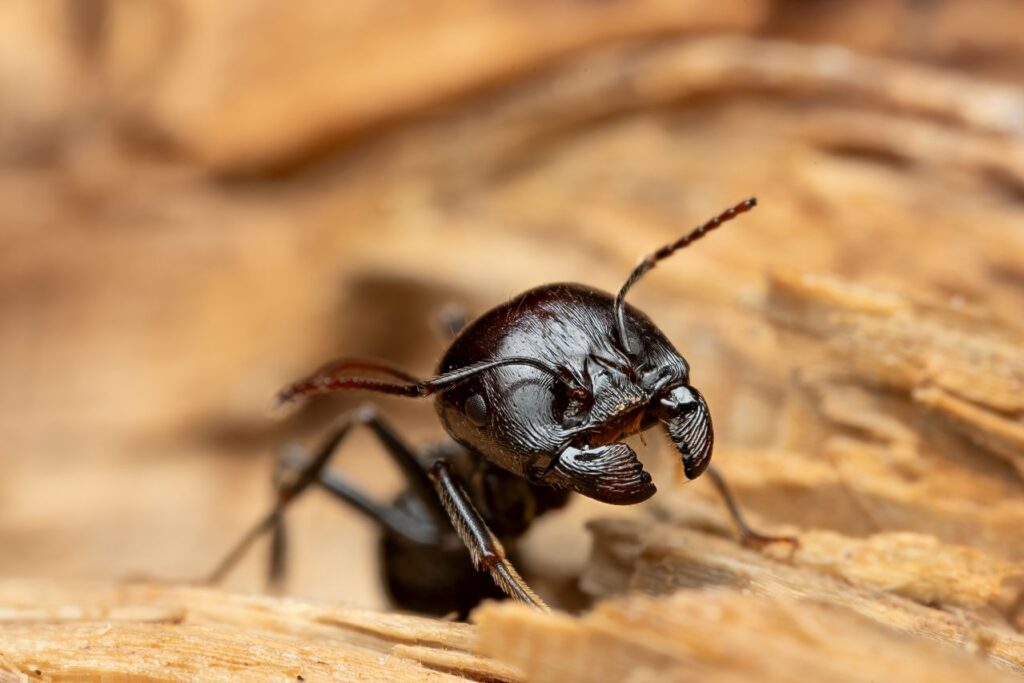
Moisture Makes Wood Easier To Excavate
Carpenter ants prefer wood that has already been weakened by water, fungal decay, or age. A slow roof leak, failed window seal, overflowing gutter, or plumbing problem can soften fibers long before obvious damage appears. Once suitable wood is available, ants may establish a parent nest or a satellite colony closer to warmth and food.
Common moisture-related risk areas include:
- Window and door trim exposed to repeated rain
- Roof edges, soffits, and fascia near damaged gutters
- Bathroom, kitchen, and laundry-room framing near leaks
- Crawl-space supports affected by poor ventilation
- Porch posts, deck connections, and siding near soil
Moisture correction is essential, but drying the area does not automatically remove an established colony. Inspection is needed to determine whether galleries, workers, brood, or connected nests remain inside the structure.
Carpenter Ant Damage Differs From Termite Damage
Homeowners may notice weakened trim or wood debris and assume termites are responsible. The comparison between ant and termite damage shows why accurate identification matters. Termites consume cellulose, while carpenter ants carve out wood and push debris away from the nest.
Carpenter-ant galleries are generally smooth and clean, sometimes crossing the wood grain. Termite galleries often contain soil or mud and may follow layered feeding patterns. Carpenter ants can also leave coarse, sawdust-like frass mixed with insect parts beneath small openings.
Because both pests may remain concealed behind trim, walls, floors, or insulation, surface appearance can be misleading. A professional inspection helps distinguish active carpenter-ant nesting from termite feeding, old water damage, or ordinary wood decay before treatment or repair begins.
Exterior Conditions Can Feed Indoor Colonies
Many carpenter-ant problems begin outside. Colonies may develop in tree stumps, dead limbs, landscape timbers, wood piles, or moisture-damaged fencing. Workers then travel along foundations, utility lines, branches, or connected trim to reach food and establish satellite nests indoors.
Professionals commonly inspect:
- Trees and shrubs touching siding, roofs, or windows
- Firewood, lumber, and debris stored near the structure
- Rotting stumps, fence posts, and landscape borders
- Cracks around cables, pipes, vents, and exterior joints
- Ant trails active after dark along foundations and trim
Removing one outdoor harborage may help, but it does not confirm that interior nesting has stopped. Carpenter ants can maintain multiple connected sites, so ant control should follow travel patterns and nesting evidence throughout the property.
Early Warning Signs Often Appear Near Trim
Trim provides narrow voids, joints, and concealed edges where moisture and wood meet. Carpenter ants may use gaps around windows, doors, baseboards, rooflines, or porch details as entrances to protected galleries. The guide to early carpenter-ant signs explains why small clues deserve attention before visible deterioration expands.
Warning signs may include large black ants indoors, especially at night, faint rustling inside walls, winged ants near windows, frass beneath trim, and wood that sounds hollow when tapped. Trails may lead away from a damp area toward kitchens, pet food, trash, or other protein and sugar sources.
These signs do not reveal the entire colony. Technicians use them to narrow the inspection, trace movement, and identify whether the nest is inside the wood or connected to an outdoor source.
Professional Control Targets The Colony And Conditions
Carpenter-ant service should address nesting sites, active travel routes, moisture, and access. Treating visible workers alone may reduce sightings temporarily while the colony continues behind walls or in another part of the property. Disturbing one location can also cause activity to shift if connected satellite nests are present.
A professional plan may include:
- Inspecting damp wood, trim, voids, and exterior harborages
- Tracking nighttime trails toward nesting and feeding areas
- Applying targeted treatment to confirmed activity zones
- Recommending leak repair, ventilation, and wood replacement
- Providing follow-up visits when activity continues
Long-term control requires coordination. Pest treatment addresses the colony, while repairs reduce the conditions that made the site attractive. Sealing cracks and trimming vegetation may also limit future access once active routes are understood.
Carpenter ants gather around damp wood and trim because moisture creates workable nesting material and protected voids. The most dependable response combines identification, colony-focused treatment, moisture correction, structural repair, and follow-up. This keeps the plan tied to the actual cause and helps reduce the chance of recurring damage.
Stop Hidden Galleries Before They Expand
Contact WPC Services for professional inspection, targeted ant control, moisture-source evaluation, and follow-up focused on lasting protection.